

Brand & Creative
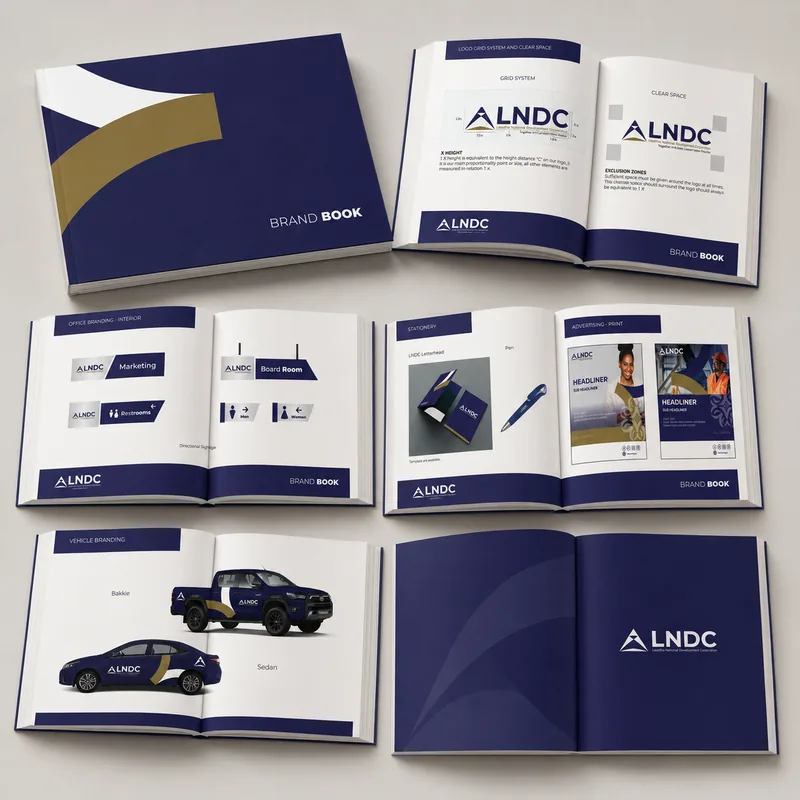
- Brand Strategy & Identity Development
- Brand Management & Maintenance
- Creative Design & Art Direction
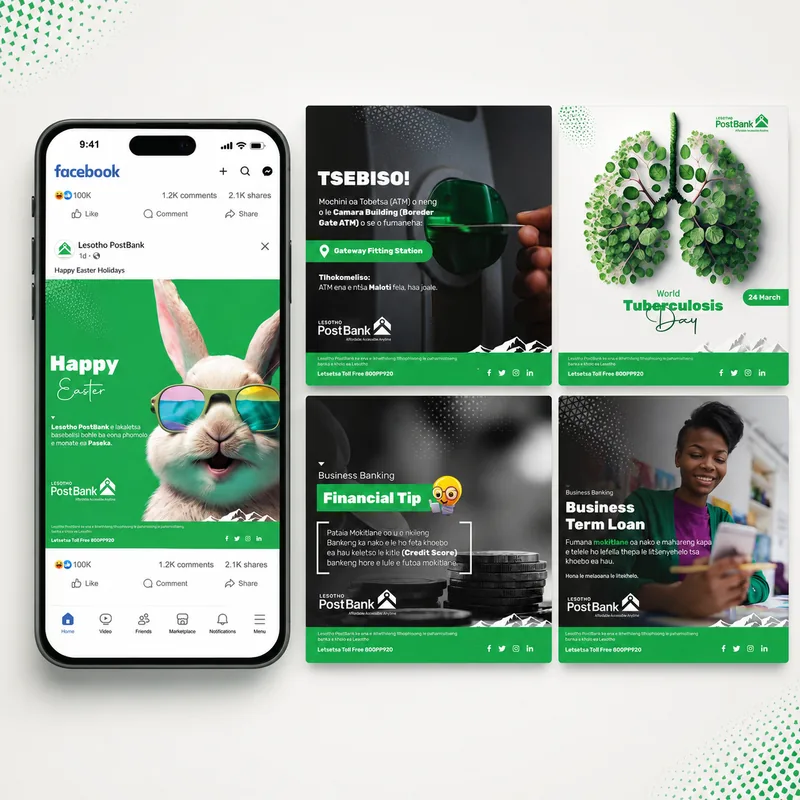
- Marketing & Brand Collateral

We bring advertising, graphic design, web development, brand strategy, and content production together into one holistic framework — so every discipline works in sync to grow your brand.


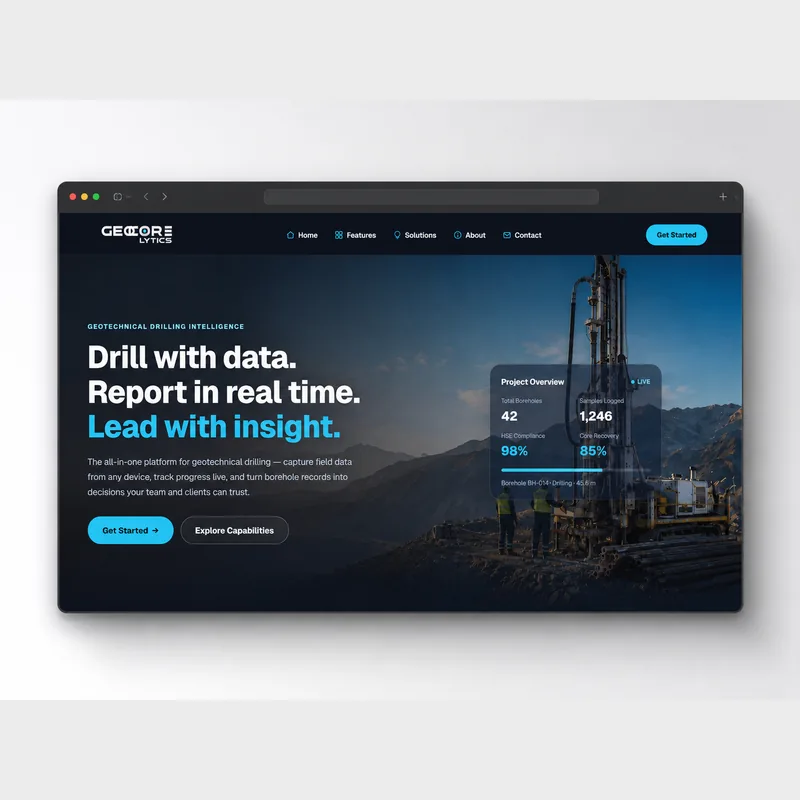
Creative design, advertising and web development that increases your brand’s visibility online.


Content marketing and communication strategy that helps your business thrive and grow.
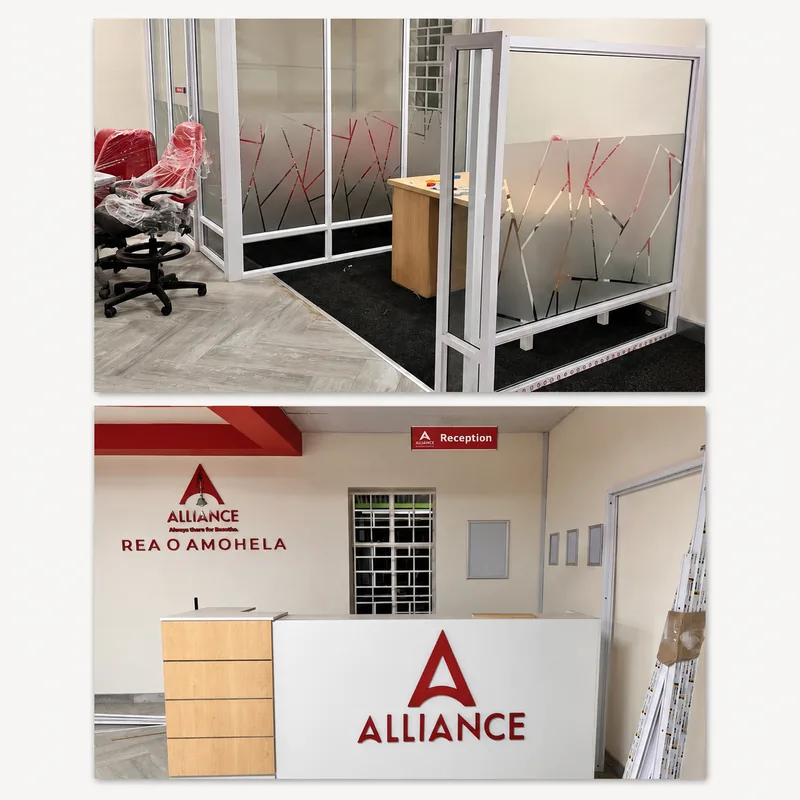
Five connected practices under one roof — from the strategy that defines a brand to the signage, campaigns and platforms that put it in front of people.
















Perspectives from the team on brand, marketing and the craft behind them.

Every designer knows the feeling. You develop a concept, refine the layout, perfect the typography, balance the colours and eventually arrive at a design that feels right. It may even be the strongest piece of work you have produced for that particular project.

Artificial Intelligence is rapidly reshaping the marketing profession. From content creation and customer analysis to campaign optimisation, research and personalisation, AI is helping marketers work faster and make more informed decisions. Its value is undeniable. However, as organisations become increasingly dependent on AI-driven tools, there is an equally important need to understand the risks that come with them.

Every designer knows the feeling. You develop a concept, refine the layout, perfect the typography, balance the colours and eventually arrive at a design that feels right. It may even be the strongest piece of work you have produced for that particular project.
Marketing across Africa has changed considerably over the past decade.
Digital platforms, mobile technology, social media and changing consumer behaviour have created new opportunities for businesses to communicate, compete and build brands in ways that were previously difficult or expensive.
Yet an important question remains:
How far is African marketing from the rest of the world?
The answer is not as simple as saying Africa is either ahead or behind.
In some areas, the difference is still noticeable.
Many African businesses continue to operate with limited marketing budgets, fragmented consumer data, smaller research capabilities and unequal access to sophisticated marketing technology.
In some organisations, marketing is still viewed mainly as advertising, graphic design, social-media posting or event promotion.
That limits the contribution marketing can make to business growth.
Marketing should be involved much earlier in the business process — helping organisations understand customers, position products, identify opportunities, improve customer experience and build long-term brand value.
It would, however, be inaccurate to describe African marketing simply as underdeveloped.
African marketers often work within highly complex environments and have developed a strong ability to adapt.
Campaigns frequently combine traditional media, radio, outdoor advertising, social media, community engagement, influencers, activations and direct communication.
This ability to work across different channels reflects the realities of African markets.
Our challenge is therefore not necessarily a lack of creativity.
In many cases, the challenge is the infrastructure, research, technology and investment available to support that creativity.
Another important consideration is that Africa cannot be treated as one consumer market.
Consumer behaviour differs significantly between countries, cities, communities and demographic groups.
A campaign that succeeds in Johannesburg may not necessarily succeed in Maseru, Nairobi or Lagos.
Successful marketing therefore requires more than simply adopting international strategies and adapting the visual material.
Brands need to understand local culture, language, behaviour and expectations.
That local understanding is becoming increasingly valuable.
Technology has helped reduce some of the traditional barriers.
Small businesses can now reach large audiences through digital platforms. Consumers can interact directly with brands, compare products and access international content almost immediately.
This has also raised expectations.
Customers increasingly compare their experience with local companies against the best digital experiences available anywhere in the world.
For African businesses, this means that the competitive standard is no longer only local.
Africa should continue learning from global marketing practices, but the objective should not simply be to copy what has worked elsewhere.
The greater opportunity is to combine international best practice with a deep understanding of African consumers and markets.
That requires stronger research, better use of data, investment in technology and greater recognition of marketing as a strategic business discipline.
The conversation should therefore move beyond asking:
"How do we catch up with the rest of the world?"
A more valuable question may be:
"What does world-class marketing look like when it is developed from an African perspective?"
That may ultimately be where Africa's greatest marketing opportunity lies.
Disclaimer: The views and opinions expressed in this article are those of the author and are intended for discussion and informational purposes only. They reflect the author’s personal thoughts, interpretations, observations and perspectives and should not be regarded as established facts, professional advice, or the official position of any organisation unless expressly stated. Readers are encouraged to conduct their own research and consider other perspectives.
Artificial Intelligence is rapidly reshaping the marketing profession. From content creation and customer analysis to campaign optimisation, research and personalisation, AI is helping marketers work faster and make more informed decisions.
Its value is undeniable. However, as organisations become increasingly dependent on AI-driven tools, there is an equally important need to understand the risks that come with them.
One of the most important concerns is bias.
AI systems generally learn from existing information, data and patterns. If those sources contain historical, cultural or social biases, there is a possibility that AI-generated recommendations may reproduce them.
This is particularly relevant when marketing to diverse markets.
Marketing is fundamentally about understanding people.
While AI can identify patterns and analyse large amounts of information, it may not always fully understand the cultural, social and economic context behind consumer behaviour.
This becomes especially important in Africa, where markets differ significantly in language, purchasing behaviour, income levels, cultural identity and access to technology.
A strategy developed successfully for one market cannot simply be transferred to another without considering those differences.
AI should therefore support market understanding rather than replace it.
There is also a growing risk of what can be described as automation bias — the tendency to trust a recommendation simply because it has been produced by technology.
AI-generated reports can appear detailed and convincing, but that does not necessarily mean the conclusion is correct.
Marketers still need to ask important questions:
What information informed the recommendation?
Is the information relevant to this specific market?
Does the recommendation align with the behaviour and expectations of the actual customer?
Professional judgement remains essential.
Another concern is that excessive dependence on AI could gradually make brands communicate in similar ways.
If organisations use the same platforms, prompts and approaches, marketing content can begin to sound increasingly alike.
Strong brands need distinctive ideas, personality and a clear point of view.
AI can improve efficiency, but it should not remove the human creativity and insight that make a brand different.
The future of marketing should not be framed as a competition between humans and AI.
The greater opportunity is to combine the strengths of both.
AI can process information, identify patterns and improve productivity. Human beings provide context, cultural understanding, empathy, ethics and strategic judgement.
The marketers who benefit most from AI will therefore not necessarily be those who automate everything. They will be those who know when to use technology, when to question it and when human understanding must guide the decision.
AI is becoming an important contributor to modern marketing.
But as its influence grows, so must our responsibility to use it thoughtfully.
Disclaimer: The views and opinions expressed in this article are those of the author and are intended for discussion and informational purposes only. They reflect the author’s personal thoughts, interpretations, observations and perspectives and should not be regarded as established facts, professional advice, or the official position of any organisation unless expressly stated. Readers are encouraged to conduct their own research and consider other perspectives.
Every designer knows the feeling.
You develop a concept, refine the layout, perfect the typography, balance the colours and eventually arrive at a design that feels right. It may even be the strongest piece of work you have produced for that particular project.
Then the client responds:
“This is not quite what we had in mind.”
For a creative professional, that can be frustrating. But it also highlights one of the most important lessons in design: the design you are most proud of is not automatically the best solution for the client.
Good design should certainly be visually appealing, but commercial design has a broader responsibility.
It needs to communicate something.
It needs to speak to a particular audience.
It needs to support the client's objectives.
And, ultimately, it needs to solve the problem identified in the brief.
A designer may prefer a minimalist and sophisticated approach, while the client's audience may respond better to something more direct, energetic or visually prominent.
Neither approach is necessarily wrong. The question is whether the design is appropriate for the purpose.
That distinction is important.
There is often significant thought behind a first design concept.
Because of the time and creative energy invested in it, designers can naturally become attached to the work. Feedback may then begin to feel like criticism of the designer rather than evaluation of the solution.
This is where professional maturity becomes important.
A design project should not become a competition between the designer's preference and the client's preference.
The conversation should return to the brief.
Who are we communicating with?
What action do we want the audience to take?
What message needs to stand out?
Does the design represent the brand correctly?
If those questions are answered clearly, feedback becomes easier to evaluate objectively.
Designers understand visual communication, hierarchy, typography, composition and creative execution.
The client, however, often understands something equally important: their organisation, customers and market.
There may be reasons behind feedback that are not immediately visible to the designer.
Perhaps a certain product needs greater prominence because it drives most of the client's revenue.
Perhaps a particular colour has an established meaning within the organisation.
Perhaps previous campaigns have shown that customers respond better to a specific type of communication.
A productive creative process therefore requires both sides to listen.
The designer contributes creative expertise.
The client contributes business and market knowledge.
The strongest result often comes from combining the two.
Being client-focused does not mean abandoning professional judgement.
There are times when a requested change could weaken readability, brand consistency or the overall effectiveness of the design.
In those situations, the designer should explain the reasoning behind the original recommendation rather than simply rejecting the client's request.
Professional design is partly about presentation and partly about consultation.
Instead of saying, “That will not work,” the better conversation may be:
“We can make that change, but here is how it may affect the hierarchy and visibility of the main message.”
That allows the client to make an informed decision.
Many difficult design conversations can be resolved by returning to the original objective.
Creative preference is subjective.
The brief gives the discussion direction.
If the purpose is to attract attention at an exhibition, the design needs to work in that environment.
If the purpose is corporate credibility, the solution may require a different tone.
If the target audience is young and digitally driven, the visual language may differ from communication aimed at senior executives.
A successful design should therefore be judged less by whether everyone personally likes it and more by whether it achieves what it was created to achieve.
Creative professionals should be proud of their work.
But we should also remain willing to revise, rethink and sometimes let go of an idea we personally love.
The objective is not simply to produce the designer's favourite design.
It is to create the strongest possible solution for the client's brand, audience and communication objective.
Sometimes your first concept will achieve exactly that.
Sometimes the second or fifth version will be better.
And occasionally, the design you initially resisted changing becomes the solution that works best.
That is part of the creative process.
Because in commercial design, the best design is not always the one the designer loves most. It is the one that ultimately does the job it was created to do.
Disclaimer: The views and opinions expressed in this article are those of the author and are intended for discussion and informational purposes only. They reflect the author’s personal thoughts, interpretations, observations and perspectives and should not be regarded as established facts, professional advice, or the official position of any organisation unless expressly stated. Readers are encouraged to conduct their own research and consider other perspectives.
We believe clarity builds trust — here are the questions our clients ask us most.


We offer an integrated set of services — brand identity, marketing strategy, web design and branding/graphic design — combined into one holistic framework for your business.
Timelines depend on scope and complexity. Website projects typically take a few weeks, while branding and marketing campaigns vary based on your needs.
Both. Whether you’re building your first brand or refreshing an established one, we tailor our approach to your stage of growth.
Pricing depends on project requirements, deliverables and timelines. We build custom packages so you only pay for what you need.
Absolutely — we specialise in refreshing outdated websites and brand identities to make them modern, coherent and effective.
Tell us what you need and we’ll come back to you within one working day.